
Grain-fed, free-range grain-fed or acorn-fed: what really changes (and which to choose)
The Castanoble team · 6 min read
Published on 12 September 2026
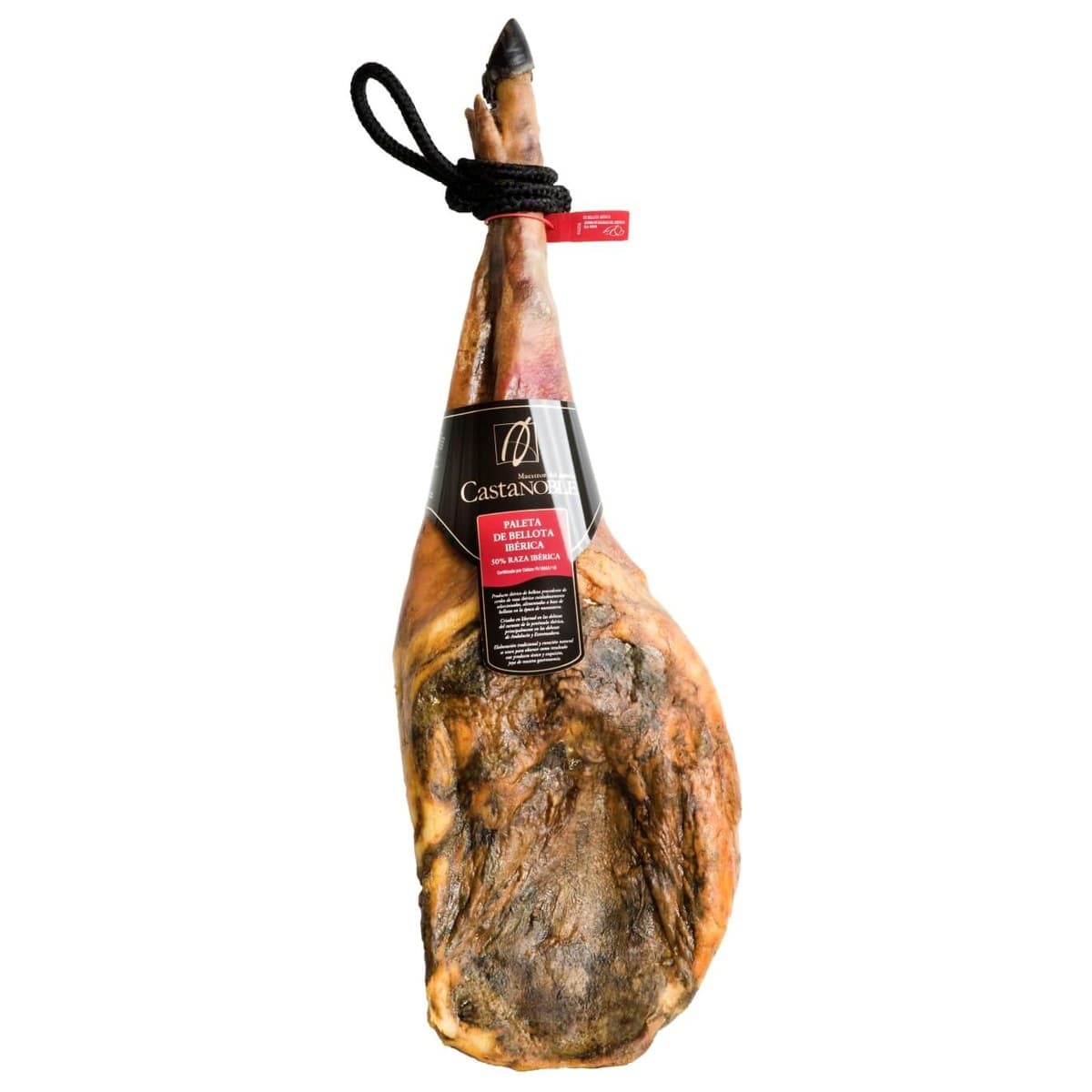
‘And can you tell the difference between grain-fed and acorn-fed?’ It's the most frequently asked question at the counter, and the honest answer is: yes, you can, but it isn't always the difference that matters. Here are the three feeding regimes recognised by the Iberico Quality Standard, what changes in the ham and when to choose each one. All with the specification sheets of our pieces in front of us, so as not to claim more than there is.
Grain-fed: Iberico raised on a farm
The Iberico pig is raised on a farm and eats natural cereal-based feed. What makes this ham Iberico is the breed: the fat infiltrates the meat and gives it that marbling and that succulence that a white pig ham does not have. With a long cure (ours exceeds thirty months), the result is a balanced ham with a clean flavour that almost everyone likes. White label.
Who it is for: everyday eating, a first purchase of Iberico, the safe gift. It is our best-seller, and that is no coincidence.
Free-range grain-fed: Iberico raised in the countryside
The same pig, but raised in the countryside: it eats natural cereal feed and, in addition, the grasses and plants of the countryside, and it moves around. That exercise refines the meat and distributes the fat better, and the plants add a touch more aroma. No acorns, so don't expect the sweetness of acorn-fed, but the difference from grain-fed can be noticed in a blind tasting. Ours is also cured for more than thirty months. Green label.
Who it's for: those who already know grain-fed and want to go up a step without reaching the price of acorn-fed. It's the step most people skip and the one that surprises most.
Acorn-fed: Iberico fattened during the montanera
This is where everything changes. The pig spends the montanera (autumn and winter) roaming freely in the dehesa, eating holm oak and cork oak acorns and the grasses of the countryside, and this diet transforms the fat: it becomes more fluid, with that sheen that melts when you touch it and a sweet, lingering flavour that cannot be achieved any other way. From there, breed makes the difference between the red label (crossbred Iberico, 50% or 75%) and the black (100% Iberico). Our Iberico acorn-fed ham is cured for more than three years; the 100% Iberico acorn-fed, for more than four.
Who it's for: the special occasion, the gift that's remembered, the person who truly loves it. And a tip from the counter: if it's your first acorn-fed, start with the red-label one. It has all the acorn-fed character and costs quite a bit less than the 100%.
What changes and what does not
- The fat changes: from firm and white in grain-fed to fluid and glossy in acorn-fed. It's the first thing you see in the slice.
- The flavour changes: cleaner and more direct in grain-fed, more herbaceous in free-range grain-fed, sweet and lingering in acorn-fed.
- The price changes, and considerably: the montanera is expensive because each pig needs hectares of dehesa and months of time.
- The breed doesn't change between grain-fed, free-range grain-fed and Iberico acorn-fed (all can be 50%). Where it does change is in 100% acorn-fed.
- The technique does not change: all three are salted, washed, dried and cured in the same way. What changes is how long they can withstand curing and how long they deserve.
Acorn-fed isn't ‘better’ than grain-fed the way one mark is better than another: it's a different ham. Choosing well means knowing what table awaits it.
The four Iberico grades, with their tag and their months of curing on each product page
View hams and shoulders