
Differences between cecina and ham, and which to choose
The Castanoble team · 5 min read
Published on 28 July 2026
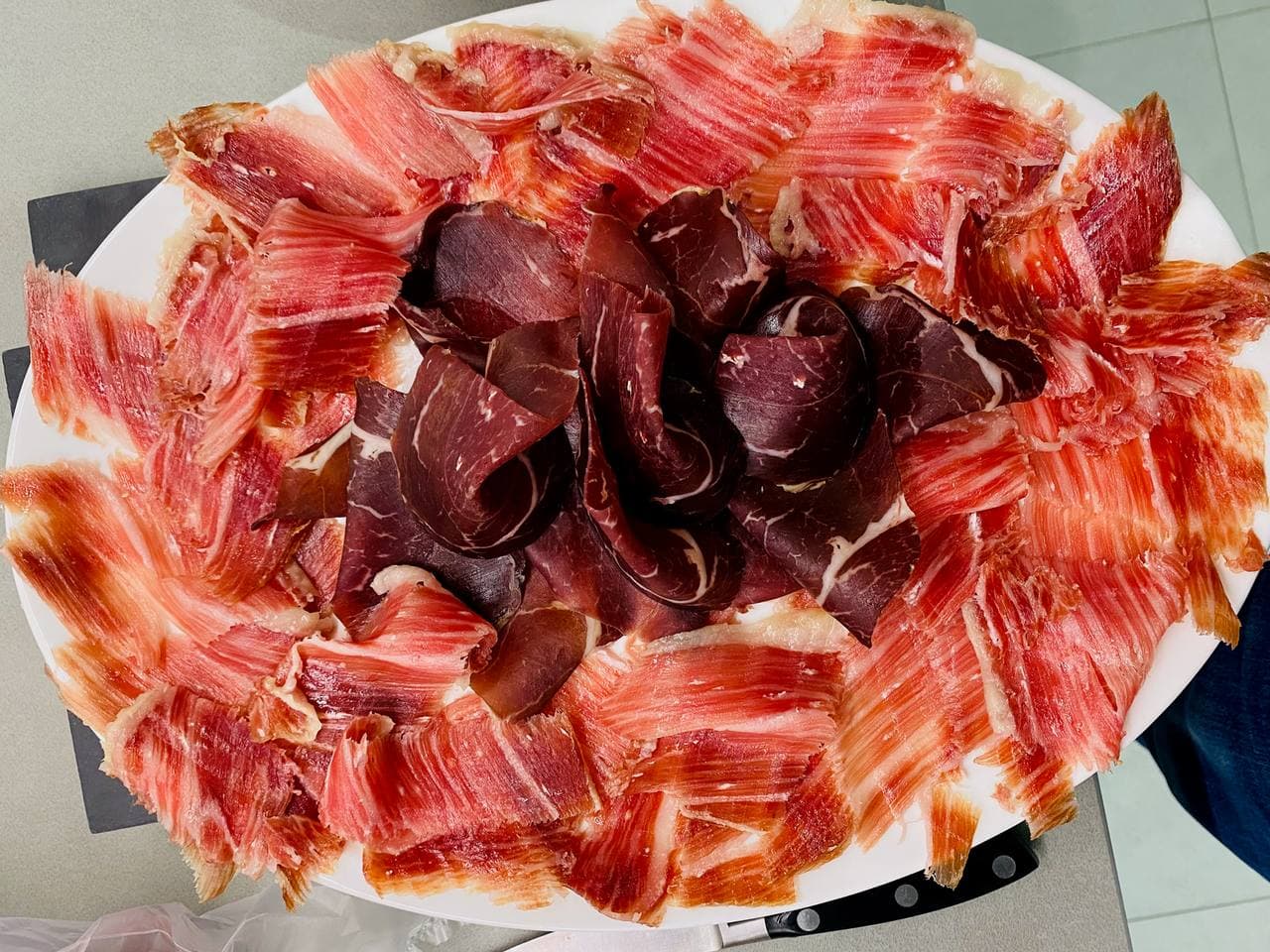
It's the question we're asked most often when someone discovers cecina: "So is this like ham?" The short answer is that they're similar in method and different in almost everything else. The long answer deserves five minutes, because it will decide which of the two you'll like more.
What they have in common
Both are air-cured meat, uncooked: they are salted, washed and left to dry for months in a cold, dry environment until they lose water, concentrate their flavour and become safe and stable. Both are served in very thin slices at room temperature, and both are products of patience: time can't be rushed without it showing on the plate.
What sets them apart
- The animal: ham is the pig's hind leg; cecina is made from the prime cuts of the beef hindquarter (thick flank, topside, silverside and rump).
- Fat: Iberico ham has marbled fat that melts in the mouth and gives it a rich, smooth texture. Cecina lacks that marbling, so its flavour comes through cleaner and more direct.
- Flavour: ham is sweet and lingering; cecina is deeper and more mineral, with a smoky or toasted note depending on how it is made. Those looking for intensity tend to choose cecina.
- Colour: the dark garnet of cecina versus the cherry red, streaked with white, of Iberico. You can tell them apart at a glance.
- Size: a whole ham is a commitment of several kilos and weeks of eating. A cecina is easier to handle at home, especially as a block.
Which is more expensive?
It depends on what you compare it with, and here it pays to be honest: a 100% Iberico acorn-fed (de bellota) ham plays in a different price league from any cecina, because behind it lies a montanera fattening period and a curing process with no equivalent. But compared with a mid-range cured ham, a good cecina sits alongside it in price and outdoes it in intensity. That is why cecina is, in our experience, one of the best flavour-for-money options in Spanish charcuterie.
And nutritionally?
Both are a source of protein, and both are cured products: they contain salt and are enjoyed in small portions. Where they differ most is in fat: according to our labels, 8.8 g per 100 g for cecina and 23 g for Iberico grain-fed (de cebo) ham.
So, which one should I choose?
- If you want to treat your guests and have the table fall silent at the first bite: Iberico acorn-fed ham.
- If you're after intense flavour and a piece that is easy to handle at home: cecina.
- If it's a gift and you don't know the recipient's tastes: ham is the safe bet; cecina, the surprise that hits the mark.
- If you don't want to choose: on a board they work better together than apart, because each one cleanses the palate for the other.
Our cecina is cured for more than fifteen months in our curing house in the province of León, and we slice and pack it in our workshop in Barcelona. Our hams are cured with the same philosophy: quality, craftsmanship and patience. Here are your two ways in.
Start with the cecina
Buy beef cecinaOr with the ham
View the hamsAnd if this has left you wanting to know more about cecina in particular — its origins, how it is cured and which part of the beef it comes from — this is our go-to guide.
The cecina guide
What cecina is