
How to cut cecina at home (and why thickness changes everything)
The Castanoble team · 5 min read
Published on 28 July 2026
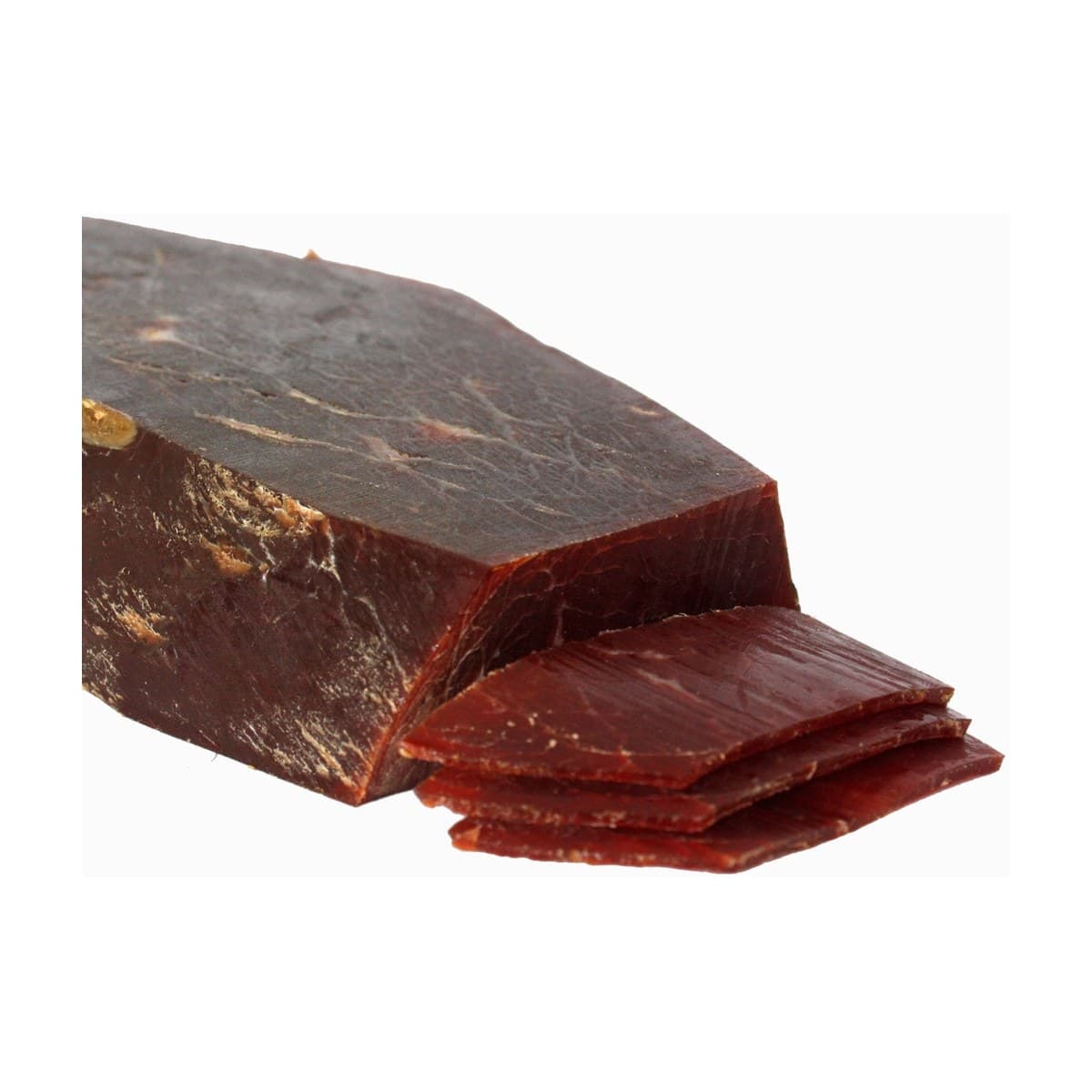
There is a huge difference between a well-cut slice of cecina and a badly cut one, and it isn't a charcutier's fad: it's physics. Cecina is beef that has been air-cured for many months, and during that time the fibres tighten and line up. If you cut in the wrong direction, those fibres reach your mouth intact and the slice turns chewy. If you cut it properly and thinly, the same piece melts away and releases all its flavour. Here's how to do it at home.
First things first: always against the grain
Look at the surface of the piece and you'll see parallel lines: that's the direction of the muscle fibre. The cut has to run perpendicular to those lines, across them. That way each slice has short fibres and melts on the palate; cutting parallel leaves them long and you'll notice it resists when you chew. It's the same rule as for a good fillet steak, except here it's even more noticeable because the curing has concentrated the meat.
Thickness: almost see-through
Cecina is cut VERY thin, even thinner than ham: thin enough to read through the slice if you hold it up to the light. It isn't showing off. In a thin slice, the salt and aromas spread across the mouth all at once and the flavour comes through rounded; in a thick one, salt and texture dominate, and the meat becomes tougher to chew. If you're just starting out, go slowly and accept that the first slices will come out uneven: better that than pressing down on the knife and ending up with strips.
The knife (and why a bread knife won't do)
- A ham knife: long, narrow, flexible blade with a smooth edge. It's the one that lets you cut long, thin slices in a single stroke.
- Properly sharp, really. A blunt edge doesn't cut: it tears, and that's where the slice is lost.
- No serrated or bread knives: the teeth rip the fibre instead of slicing through it.
- A short paring knife to trim the edges and remove the outer rind before you start.
Depending on the format you have at home
Not everyone buys the whole piece, and there's no need to. Each format calls for something different:
- Whole piece: the best approach is to rest it on a firm stand, remove the rind only from the area you're going to cut that day and keep the rest protected. It goes a long way and keeps well if you work through it in sections.
- Trimmed block (our cecina piece): it already comes rind-free and neatly shaped, so all you have to do is rest it down, find the grain and cut. It's the most convenient format for home if you like to cut as you go.
- Vacuum-packed sliced: no knife and no decisions. Take it out of the pack a little beforehand and that's it.
Take it out of the fridge before serving
This is the step most often skipped and the one that makes the biggest difference. Cold cecina is mute: the fat is hard and the aromas don't come out. Take it out in advance and serve it at room temperature, spread out on the plate without piling up the slices. If you have it in a vacuum pack, open it a little ahead of time so the meat can breathe and regain its colour and sheen.
Our cecina is air-cured for more than fifteen months. All that time can be ruined in ten seconds with a blunt knife and a thick slice.
Once you've started the piece
A started piece should be kept in a cool, dry place at a stable temperature, or refrigerated — as stated on its own product sheet. Cover the cut face so it doesn't dry out, using the rind you've removed or a clean cloth, and if you notice the surface has dried out too much from one day to the next, remove a thin layer before carrying on: underneath it's perfect.
Prefer the work done for you?
See the sliced cecinaAnd if you fancy cutting it yourself, the trimmed block is the most rewarding way to start: it comes rind-free and already neatly shaped, so all you have to do is find the grain and get going.
For cutting at home
See the cecina pieceIf you want to understand where all this comes from — which part of the beef cecina is made from, how it's cured and why it tastes the way it does — we explain it all in our cecina guide.
The complete guide
What cecina is