
The curing process of Iberico ham
The Castanoble team · 4 min read
Published on 10 April 2018 · Updated on 9 July 2026
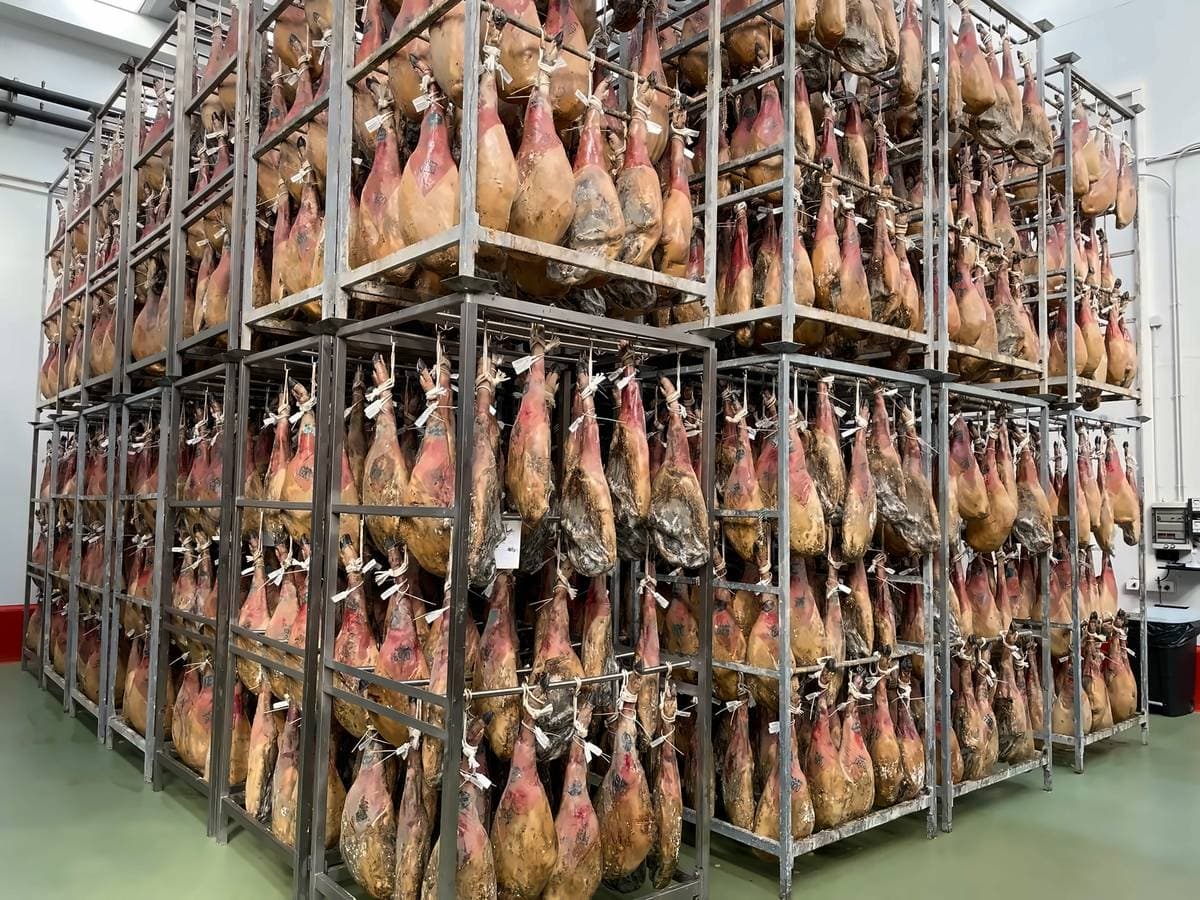
The curing process of Iberico ham spans from the slaughter of the Iberico pig until the finished piece reaches ham shops, charcuteries or specialist gourmet ham shops.
Curing Iberico hams in Spain is a fairly simple process which nonetheless requires a great deal of skill to do well. Beyond the raw material of the Iberico pig, curing needs three basic things: time, air and pure sea salt. Today, the whole process — from slaughter and butchering to curing in the ageing area — takes place in hygienic, modern, high-tech facilities that guarantee optimal production, consistent quality and suitable environmental conditions at all times.
Curing follows the rhythm of the seasons: traditionally, ham was salted in winter and went on curing throughout the year. The process therefore begins at a very low temperature and high humidity; little by little, the humidity falls and the temperature rises as the seasons progress.
Curing Iberico ham needs only three things: time, air and pure sea salt.
Traditional method of curing Iberico ham
The first step in curing any ham is butchering and cutting, after which comes trimming: parts of the fat and muscle are removed from the outer layer and from the skin. The meat is then covered with sea salt for one or two weeks and rinsed thoroughly. Next comes the resting stage, in which the salt spreads evenly through the meat while the pieces gradually dry; this can last one or two months.
After resting, the hams are hung in the drying rooms for up to six months, at a suitable temperature. In this phase, the proteins and fats of the pork begin to transform: the ham begins to take shape.
The next stage is ageing, which takes place in the cellar, where conditions fluctuate with the seasons and the piece can lose up to 40% of its weight. In an Iberico acorn-fed (de bellota) ham, ageing lasts between two and four years. Traditionally, this process is managed by controlling the flow of air from outside, under the supervision of a master ham curer.
Modern method of curing Iberico ham
With advances in technology and growing attention to hygiene and health, producers have developed a four-stage curing technique:
- Salting and washing: the hams are covered with sea salt for one or two weeks (the exact time depends mainly on the weight of the piece). The curing room is kept at a temperature close to freezing point, with a humidity of 80-90%. The salt is then removed from the skin of the ham with lukewarm water.
- Resting time: once thoroughly washed, the hams stay in a low-temperature room, with a humidity of 80-90%, for one or two months. This long rest allows the salt to spread evenly throughout the piece.
- Drying and maturing: once the rest is over, the ham is moved to the drying room, where temperature and humidity are regulated automatically by a high-quality ventilation system. During this stage, the ham continues to lose internal moisture, which allows it to retain its aroma.
- Time in the cellar: in the final stage, the ham is hung in a cellar for between two and four years. The biochemical process continues and, in the end, the Iberico ham reaches its definitive aroma and flavour. This phase is carefully controlled with modern computer systems that maintain the optimum temperature and humidity.
Frequently asked questions about curing Iberico ham
How long does an Iberico ham take to cure? It depends on each piece, but in an Iberico acorn-fed ham the time in the cellar alone lasts between two and four years, to which must be added salting, resting and the time in the drying room.
What does a ham need to cure well? Three basic things: time, air and pure sea salt. Add to these good raw material and the skill of the master ham curer who oversees every stage.
Why does ham lose weight during curing? Because the piece gradually loses moisture; in the cellar it can lose up to 40 % of its weight, and it is during this slow drying that the ham develops its final aroma and flavour.
After years of patience, curing and time in the cellar, only the best part remains: enjoying it. Discover our Iberico Free-Range Grain-Fed Ham 50% Iberico Breed (de cebo de campo), cured for more than 30 months.
View Iberico Free-Range Grain-Fed Ham 50% Iberico Breed