
Iberico ham croquettes recipe
The Castanoble team · 6 min read
Published on 21 April 2017 · Updated on 9 July 2026
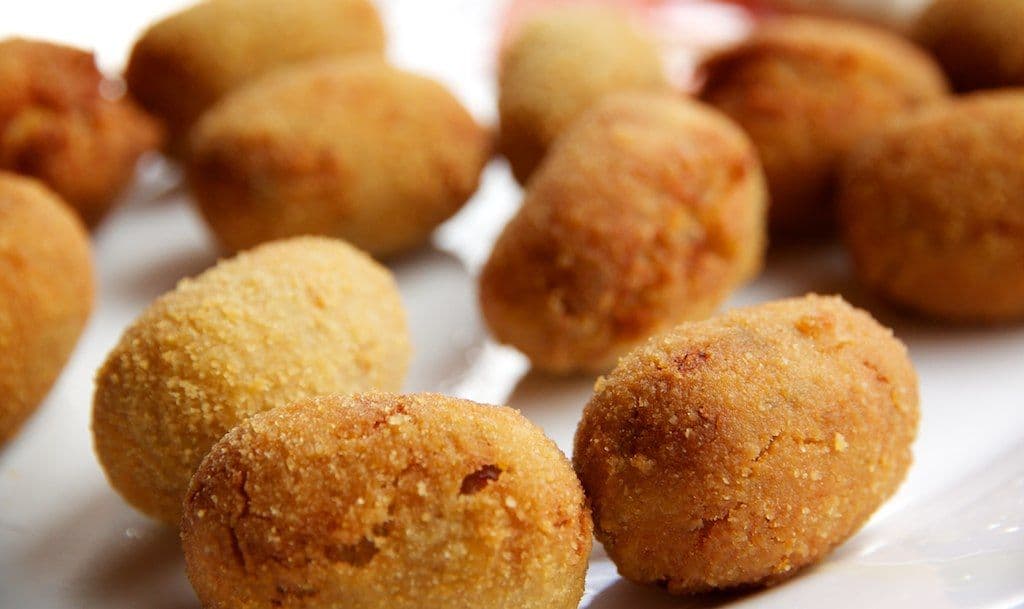
Croquettes are a hugely popular dish all over the world: nobody can resist a good croquette. To make something special, capable of winning over even the most demanding palates, the key is to make them with Iberico ham. In this post we share our step-by-step recipe and a few cooking tips so they come out creamy on the inside and nicely golden on the outside.
Those of us who work with ham every day know that croquettes are not only a classic but also one of the best ways to make the most of every part of a ham. The chunks and trimmings left over as you finish carving the ham, too thick to eat as slices, are perfect for the frying pan: they concentrate all the flavour and nothing goes to waste.
Ham, the key to good croquettes
There is no need to save your best slices for the mixture. For croquettes, the ham should be chopped very finely, and chunks, tips and trimmings work wonderfully here. A tip from us: don't remove all the marbled fat. As it melts in the pan, that fat spreads the Iberico flavour throughout the mixture and adds juiciness.
Another important point: the ham already brings its own saltiness. That is why it is wise to be cautious when salting the sofrito and the mixture, taste before adjusting and only correct the seasoning at the end. It is always easier to add salt than to take it away.
Ingredients (5 servings)
- 190 g Iberico ham
- 4 eggs
- 1 onion
- 3 garlic cloves
- 2 tablespoons butter
- 200 g wheat flour
- 500 ml milk
- Nutmeg
- Olive oil
- Salt
- Breadcrumbs
A quick note before we put our aprons on: of the 200 g of flour, we will use about 100 g for the mixture and keep the rest for coating. Of the 4 eggs, we will boil 3 for the mixture and keep 1 for the breadcrumb coating.
Method
We start by boiling 3 eggs with a little salt for 10 minutes. Then we transfer them to cold water to make them easier to peel. Once ready, we cut them in half and leave them to cool for a few minutes. We chop the onion into a brunoise and do the same with the garlic and the ham, although these are best chopped very finely.
Next, we melt a knob of butter in a frying pan. Once it has melted, it is time to add the garlic; it should turn golden before the onion goes in. Once the onion has been added, we season with salt and pepper and let it soften until translucent. We add the ham and sauté it briefly so that the other ingredients take on its flavour. When finished, we transfer the entire contents of the pan to a blender jug together with the boiled eggs and blend to taste.
After blending, we return the mixture to the pan. We add a little olive oil and 100 g of flour, stir and let it brown. As the ingredients come together, we gradually add the milk until a firm mixture forms. We grate in nutmeg to taste. When the mixture comes away from the pan, that is the clear sign that it is ready. We leave it to cool for a few minutes on a plate covered with cling film to stop a skin forming on the surface.
When the dough is cold, or at a manageable temperature, we shape the croquettes. Before frying them, we coat them first in flour, then in beaten egg and, lastly, in breadcrumbs.
For frying, the oil should be very hot, but not smoking.
As they are fried, we place the croquettes on kitchen paper, which helps remove the excess fat for an excellent flavour and texture. Done! The Iberico ham croquettes are now ready to enjoy.
Tips for croquettes that are creamy inside and crispy outside
The secret to a smooth mixture is patience: add the milk little by little, stirring constantly, so the flour blends in without lumps. If a few still remain, a quick blitz with a hand blender will sort them out. You will know the mixture is just right when it comes away from the sides of the pan by itself.
Resting is just as important as cooking. Let the mixture cool completely before shaping the croquettes: a cold mixture is easier to handle, can be rolled without sticking to your hands and holds together during frying without splitting. If you can also leave it to rest in the fridge, covered with cling film touching the surface, the result will be all the better for it.
When frying, small batches are best: if we put too many croquettes in at once, the oil loses heat, the coating soaks up fat and the inside doesn't melt properly. Use plenty of oil, leave space between them and don't move them more than necessary until they are golden.
How to serve them
Croquettes are best served freshly made: let them rest for a minute after taking them out of the pan, as the inside comes out very hot, and serve them straight away, when the contrast between crispy and creamy is at its best. They work just as well as a sharing appetiser as they do as a starter, served with a simple salad. And if there are also a few freshly cut slices of ham on the table, the appetiser is sorted.
Frequently asked questions
Can Iberico ham croquettes be frozen?
Yes, and it is a highly recommended way to always have a supply at home. Freeze them once shaped and breaded, before frying, well spaced out on a tray so they don't stick together; once frozen, you can transfer them to a bag or an airtight container. When it comes to frying them, there is no need to defrost them: straight from the freezer into very hot oil, in small batches.
Which part of the ham is best for making croquettes?
Any part will do, but the chunks, tips and trimmings left over as you get to the end of the ham are ideal: they are easy to chop, pack plenty of flavour and let you use the whole ham. The important thing is to chop it very finely, so that it spreads evenly throughout the mixture and there are no chewy bits.
Why do croquettes split when fried?
It is usually down to three reasons: a mixture that is too soft or has not rested enough, an incomplete breadcrumb coating that leaves areas uncovered, or oil that is not hot enough. Check that each croquette is well sealed with breadcrumbs, let the mixture rest in the cold and fry in small batches, with the oil hot but not smoking.
Can I make the dough the day before?
Yes; in fact, the dough improves with resting. Keep it in the fridge covered with cling film pressed onto the surface, to stop a crust from forming, and shape the croquettes the next day with the dough well chilled. You will notice that they are easier to shape and that the frying is cleaner.
Good croquettes start with a good ham: with a boneless piece you will have slices for the table and cubes for the frying pan.
View boneless Iberico grain-fed (de cebo) ham