
Iberico ham: how it is made
The Castanoble team · 3 min read
Published on 18 January 2017 · Updated on 9 July 2026
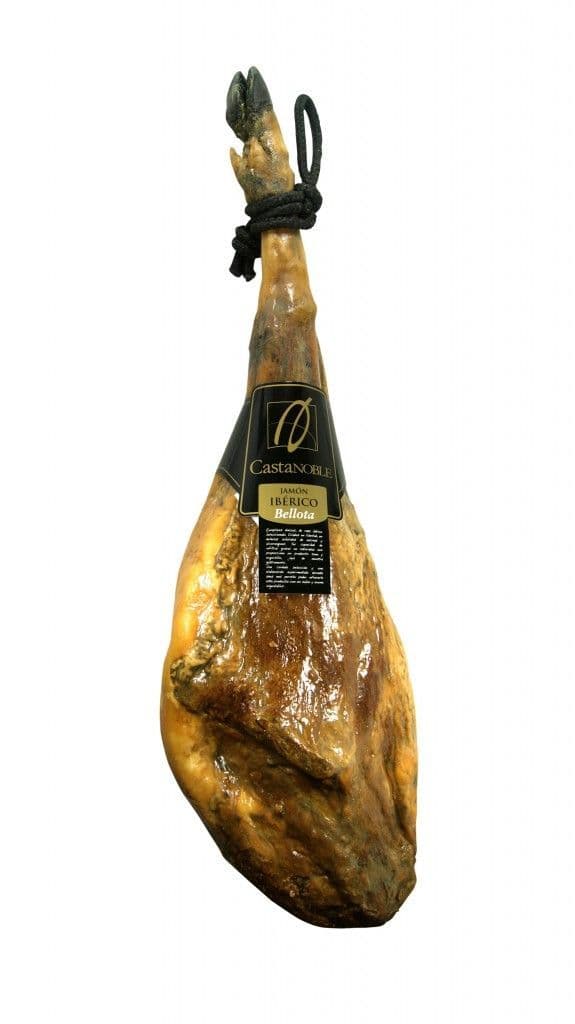
Iberico ham is, without a doubt, one of the greatest delicacies and one of the most representative products of Spanish gastronomy. Many people come from every corner of the world eager to try it and savour it at their leisure. However, most people do not know how it is made. If that is your case, we will tell you step by step.
Raising on the dehesa
Iberico ham is made from the hind legs of the Iberico pig. In the case of acorn-fed (de bellota) ham, the highest-quality Iberico, the animals are raised free-range on large dehesas, forming herds that generally feed on the acorns fallen from cork oaks and holm oaks. As this food is rich in carbohydrates and fats, and the pigs can eat more than 8 kilos a day, they put on weight quickly. Furthermore, because they are constantly on the move as they roam freely, the fat infiltrates the muscles, giving rise to the characteristic marbling of this type of ham. When they reach their ideal weight, they are slaughtered.
Butchering and salting
During the butchering stage, excess fat and cartilage are removed. The leg is then massaged to expel any blood that may remain inside. Next, the piece is buried in sea salt for approximately one day per kilo of weight, although this time may vary slightly according to the judgement of the master ham curer. In our case, we opt for a short salting and a long cure, so that the final product has just the right amount of salt. Once the necessary time has passed, the salt is removed and the surface of the ham is washed to remove any salt still clinging to it.
The drying room
Then comes the time to take the leg to the drying room to begin the curing process, with thorough control of temperature and ambient humidity. During this stage, the ham loses almost all of its water and the muscle hardens, so its weight gradually decreases. This stage usually lasts between four and six months.
Curing in the cellar
Once drying is complete, curing in the cellar begins, during which the fat stabilises and the ham acquires all of its characteristic flavour. The average period in the cellar is between 2 and 4 years, and the weight loss reaches between 33 % and 40 % of the weight on entering the salting stage.
It is quite common for master ham curers to begin this curing stage by greasing the hams with oil and lard, which improves the texture, makes it juicier and adds a nuance to the final flavour. Once all these stages are complete, the ham is ready to enjoy.
Frequently asked questions
How long does it take to make an Iberico ham?
Adding together the salting, the months in the drying room and the time in the cellar, the complete process is measured in years: the cellar curing alone lasts on average between 2 and 4 years.
Why does acorn-fed ham have such characteristic marbling?
Because the free-range Iberico pig is constantly moving around the dehesa, and this exercise causes the fat to infiltrate the muscles, creating the streaks typical of these pieces.
What determines how salty the ham is?
The time the piece spends buried in salt, approximately one day per kilo of weight. Each master ham curer adjusts this time according to their own judgement; we prefer a short salting and a long cure, to achieve a ham with just the right amount of salt.
From the holm oak groves of the dehesa to the cellar: every Iberico ham is the result of years of patience and skill.
Now that you know how Iberico ham is made, discover our Iberico Grain-Fed Ham 50% Iberico Breed (de cebo): a short salting period and more than 30 months of curing.
View Iberico Grain-Fed Ham 50% Iberico Breed