
The origins of ham
The Castanoble team · 6 min read
Published on 12 October 2017 · Updated on 9 July 2026
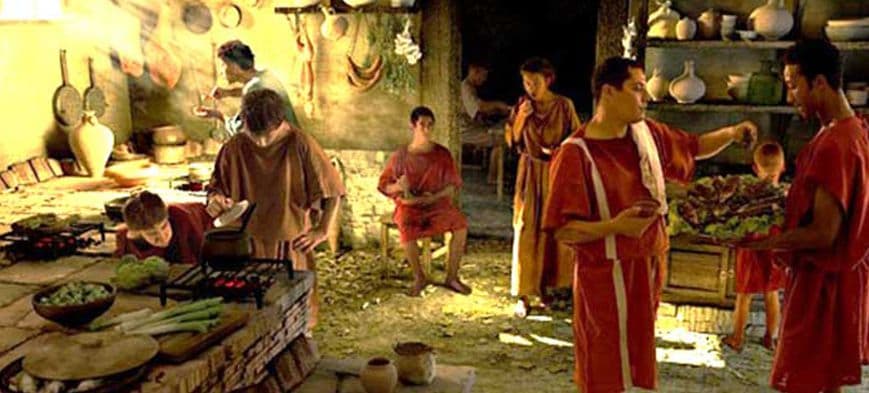
One of the most highly prized products of our gastronomy, by consumers both in Spain and abroad, is ham. Its origins go back a very long way, to when the need arose to preserve food so that it could be eaten in every season of the year. Ham was therefore born out of a vital necessity: keeping pork in good condition. The animals were slaughtered and there was no other way of preserving the meat, until it was discovered that, when the pieces were salted, they stayed in good condition for a long time. From that necessity came the technique that, refined century after century, has given us the ham we know today.
The history of ham and its origins
It was the need to cure meat in order to preserve it that gave rise to the hams we enjoy today. The logic is simple and has not changed since then: salt draws the moisture out of the meat and slows its deterioration, and air and time do the rest. What began as sheer survival eventually became, over the centuries, a craft with its own gestures, its own rhythms and its own patience.
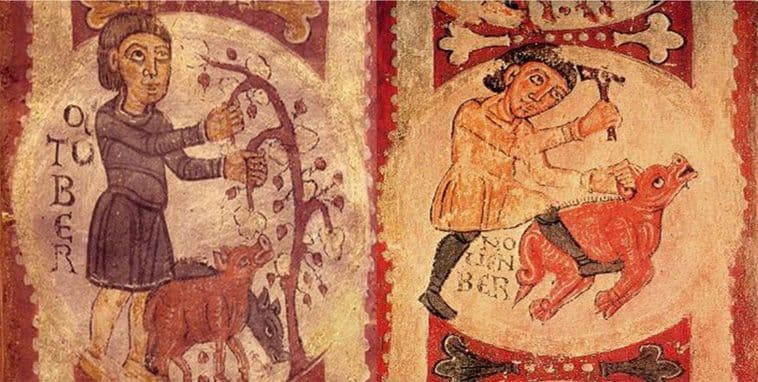
Centuries later, ham became a delicacy reserved for the wealthiest classes of society: only well-off people could afford to eat it. That status as a prized and scarce product stayed with it for a long time, and partly explains the prestige it still enjoys today on any table.
Before the Romans arrived on the peninsula, the Iberi people were already trading in essential foods such as olive oil, wine and meats. Among the meats they produced were cured sausages and a very special one that today we know as ham. In other words, when Rome set foot on the peninsula, people here already knew how to salt and preserve pork.
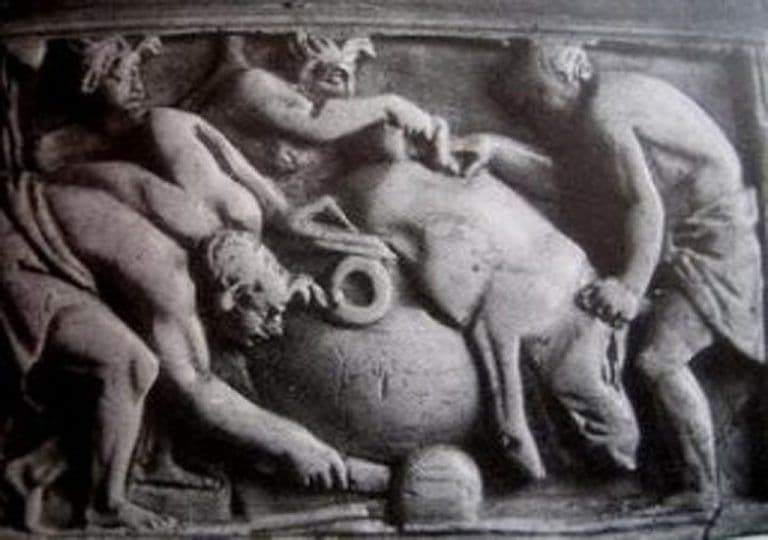
That culture was passed down from generation to generation. For a very long time, the pig slaughter (matanza) was a family task in villages across much of Spain: a way of making use of the whole pig and of stocking the household larder for the months ahead. Much of the craft practised in curing houses today comes from those hands and that memory.
With ham's origins reaching back to the times of the Roman Empire, it is worth noting that a fossilised ham, which experts date as 2,000 years old, was found in the ruins of Tarraco (Tarragona). Furthermore, an edict of the Emperor Diocletian tells us that Barcino — today's Barcelona — was already exporting hams to Rome at that time.
Iberico ham is considered a true star product of Spanish gastronomy.
From necessity to craft: how we live it at Castanoble
We are especially fond of that fact about Barcino: two thousand years later, we are still offering ham from Barcelona, where we have our workshop and our shop, with pieces cured in our own curing house in Castilla y León. We have been ham masters since 1973 and we work as it has always been done: salt, air and time, with no shortcuts. For us, the history of ham is not an anecdote; it is the explanation of why we do things the way we do.
How to serve ham so you can enjoy it as it deserves
A product with so much history behind it deserves a little care at the table. There is no need to overcomplicate things: a few simple steps make all the difference.
- Serve it at room temperature. If the ham is sliced and you keep it in the fridge, take it out a while before eating: the fat softens, glistens and releases all its aroma.
- Cut thin, almost transparent slices. In the mouth they are much tastier and more delicate than thick chunks.
- Cut it just before serving. Freshly cut ham always wins; if there is any left over, cover it well so that it does not dry out.
- Keep the accompaniments simple: good bread, a few breadsticks (picos) and little else. Very strong flavours mask its nuances.
Tips for buying a good ham
Heir to such a long tradition, ham today comes in very different types and formats. Choosing well is easier than it seems if you keep a few ideas in mind.
- Always read the label. The sales name tells you what type of piece you have in front of you; if in doubt, ask the person selling it to you.
- Buy from producers or shops you trust, who can tell you where the piece comes from and how it has been made.
- Choose the format according to how much you eat: the whole piece is the classic option if ham is eaten regularly at home; boneless makes carving much easier; and sliced packs are perfect for occasional treats.
- Tell ham and shoulder apart: ham comes from the pig's hind legs and shoulder from the front legs. Shoulder is smaller and usually more affordable; when well made, both bring great pleasure.
Frequently asked questions about the origins of ham
These are some of the questions we are asked most often about the history of this product.
Where and how did ham originate?
On the Iberian Peninsula, long before the Common Era. It was born as a practical solution to a survival problem: when pork was salted, it kept for months without spoiling. The Iberi people were already making and trading these meats before the arrival of the Romans, who turned ham into a prized product throughout their empire.
Is it true that a 2,000-year-old ham has survived?
Yes. A fossilised ham, which experts date as 2,000 years old, was found in the ruins of Tarraco, today's Tarragona. It is one of the most striking pieces of evidence of how old this tradition is in our land, along with Diocletian's edict documenting that Barcino was already exporting hams to Rome.
Was ham always a luxury food?
For centuries it was: it was a delicacy reserved for the wealthiest classes, who were the only ones who could afford it. Today, fortunately, there is a wide variety of pieces and formats, so every household can find a ham to suit it without sacrificing quality.
Why is ham salted?
Because salt draws moisture out of the meat and stops it from spoiling. That was the discovery that gave rise to ham: what began as a simple method of preservation turned out, with rest and air, to produce a unique flavour and texture. That is why salting is still the basis for making any cured ham.
Two thousand years later, the tradition lives on. Discover our 100% Iberico acorn-fed (de bellota) ham, cured slowly in our curing house in Castilla y León.
View 100% Iberico Acorn-Fed Ham