
The secret of Iberico acorn-fed ham: the dehesa and the acorns
The Castanoble team · 6 min read
Published on 24 August 2015 · Updated on 9 July 2026
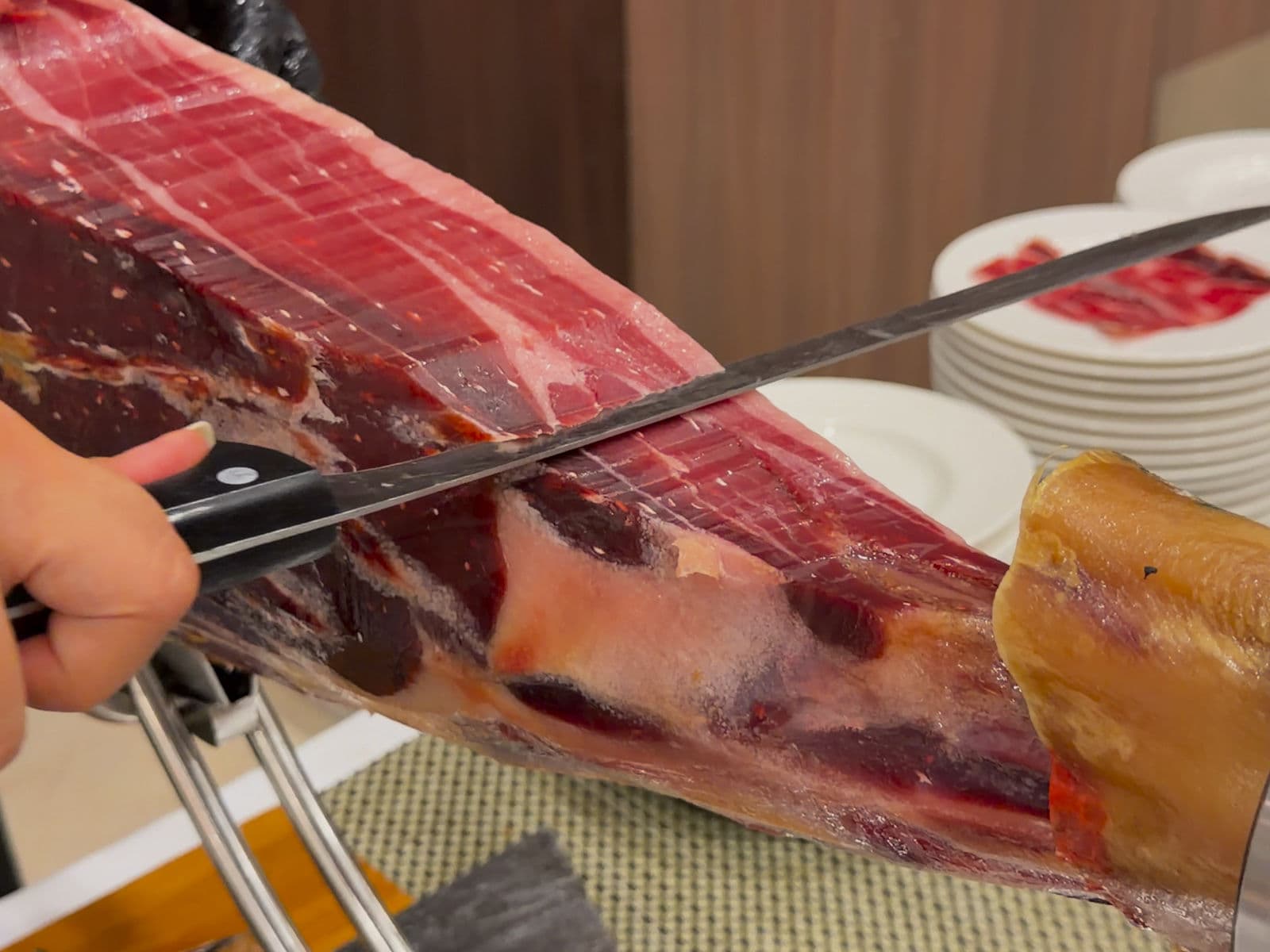
One of the main keys to the success of Iberico acorn-fed ham is the rearing of the animals on the dehesas. The pigs are raised in the open, and their diet is based on acorns from holm oaks and cork oaks. This gives Iberico acorn-fed ham an identity of its own that sets it apart from all other hams.
Acorns give Iberico acorn-fed ham a very special and distinctive flavour, with far more nuances than ham from a pig fed on compound feed.
We look at why the dehesa makes such a difference and add practical tips on serving, storing and buying this ham.
Acorns
Acorns are very high in fat. This does not mean the animal fattens simply by accumulating fat: because it is raised in the open on the dehesa, it exercises its muscles a great deal. The combination of acorns and exercise produces infiltrated fat that melts at room temperature. That is why Iberico acorn-fed ham is one of the most highly prized of all cured meats.
The season in which the pigs roam the dehesa feeding on acorns is known as the montanera. It is the final stage of rearing and the one that completes the character of the ham: the animal walks, forages for its food and fattens slowly, eating what the land provides.
That daily exercise has a consequence you can see with the naked eye: the fat does not stay only on the outside of the piece but infiltrates the muscle, forming the characteristic marbling of Iberico. As the slice comes up to temperature, that fat turns glossy and begins to melt, and that is when the ham releases its full aroma.
The dehesas
Dehesas are a very particular ecosystem: kilometres of countryside where animals graze peacefully in the shade of several species of tree, above all the holm oak and the cork oak. They stand for harmony between herders and nature. Their use as enclosed grazing land dates back many centuries, to when they were great holm oak forests that their owners used for raising livestock. These forests were called ‘defensa’, which is where the present-day word comes from.
Today they are still vast expanses of land where animals are raised, in this case acorn-fed Iberico pigs, under the unique conditions of these distinctive pastures, found only in Spain and characteristic of its climate.
What are these unique conditions?
Without doubt, the trees, which are responsible for the fertility of the soil. They also provide shade that creates a very particular microclimate and protects both the ground and the animals grazing on it. The holm oak and the cork oak produce the acorns, the main food of acorn-fed Iberico pigs. They do so between September and February, so this is the fattening season for the pigs. Besides acorns, the animals also eat leaves and roots, especially at times when acorns are scarce.
This small and very special ecosystem produces the most exquisite Iberico acorn-fed hams.
How you can taste the dehesa in every slice
It may sound like poetry, but you can taste the dehesa at the table. A good Iberico acorn-fed ham offers a deep aroma, a long flavour whose nuances unfold gradually, and a fluid fat that melts in the mouth. Ham from a pig raised on compound feed tastes flatter by comparison.
How to serve it at home so it shines
It would be a shame to spoil the work of the countryside and the curing house once it reaches your home. Here is the advice we give at the counter:
- Let the slices come up to temperature: take them out a while before serving. When cold, the fat is firm and the aroma lies dormant.
- Slice thinly: small, almost translucent slices that can be eaten in a single bite.
- Only cut what you are going to eat straight away: the piece keeps better whole than sliced.
- Serve it on its own or with good bread: it needs no accompaniments to mask it.
- When you have finished, protect the cut surface of the piece by covering it with its own fat or a clean cloth.
Tips for buying wisely
Choosing a good Iberico acorn-fed ham does not require being an expert, but it does mean paying attention to a few details:
- Read the full legal name: the ‘acorn-fed’ designation and the percentage of Iberico breed are part of the product name and tell you exactly what you are buying.
- Choose the format to suit how much you eat: a whole piece if your household loves ham, boneless for easy carving, or sliced if you prefer to open and serve.
- Know the difference between ham and shoulder: the ham is the hind leg and the shoulder is the smaller foreleg. They share the same origin and diet; what changes is the size and the yield.
- Buy from someone who can tell you where the piece comes from: behind every ham there is a dehesa, a montanera and a curing house.
Frequently asked questions about Iberico acorn-fed ham
We close with the questions we are asked most often by people trying this product for the first time.
What is the difference between acorn-fed ham and grain-fed (de cebo) ham?
Feeding and rearing. Acorn-fed Iberico ham comes from pigs reared free in the dehesa, which in their final stage feed mainly on acorns, as well as leaves and roots. Grain-fed ham comes from animals fed on compound feed. Both can be good products, but acorn-fed ham offers more nuances of aroma and flavour, which is why it is also the most highly prized.
Why does the fat of acorn-fed ham melt so easily?
Because much of it is formed during the montanera, when the pig eats acorns, and it is a more fluid fat. That is why ham is best served at room temperature: with the gentle warmth of the surroundings, the fat turns glossy and the slice gains aroma and richness.
How do I store ham once it has been started?
If it is a whole piece, keep it in a cool, dry place away from sources of heat, and cover the cut surface with its own fat or with a clean cotton cloth so that it does not dry out. If it is packaged sliced ham, follow the instructions on the packaging, eat it soon once opened and let the slices come to room temperature before serving them.
Which should I choose: ham or shoulder?
It depends on how much your household eats. The shoulder is smaller, is finished sooner and some people find it slightly more intense in flavour; the ham yields more and offers a wider, more even cut. For a small household, the shoulder is a good way in; if it is eaten every day, the hind leg is worth it.
At Castanoble we have been in the ham trade since 1973, and if there is one thing we have learnt, it is that good Iberico begins in the dehesa: our job is to respect what the countryside has already done well.
Taste everything the dehesa brings to Iberico with our 100% Iberico Acorn-Fed Ham.
View 100% Iberico Acorn-Fed Ham