
The ideal temperature for Iberico ham
The Castanoble team · 6 min read
Published on 13 November 2015 · Updated on 9 July 2026
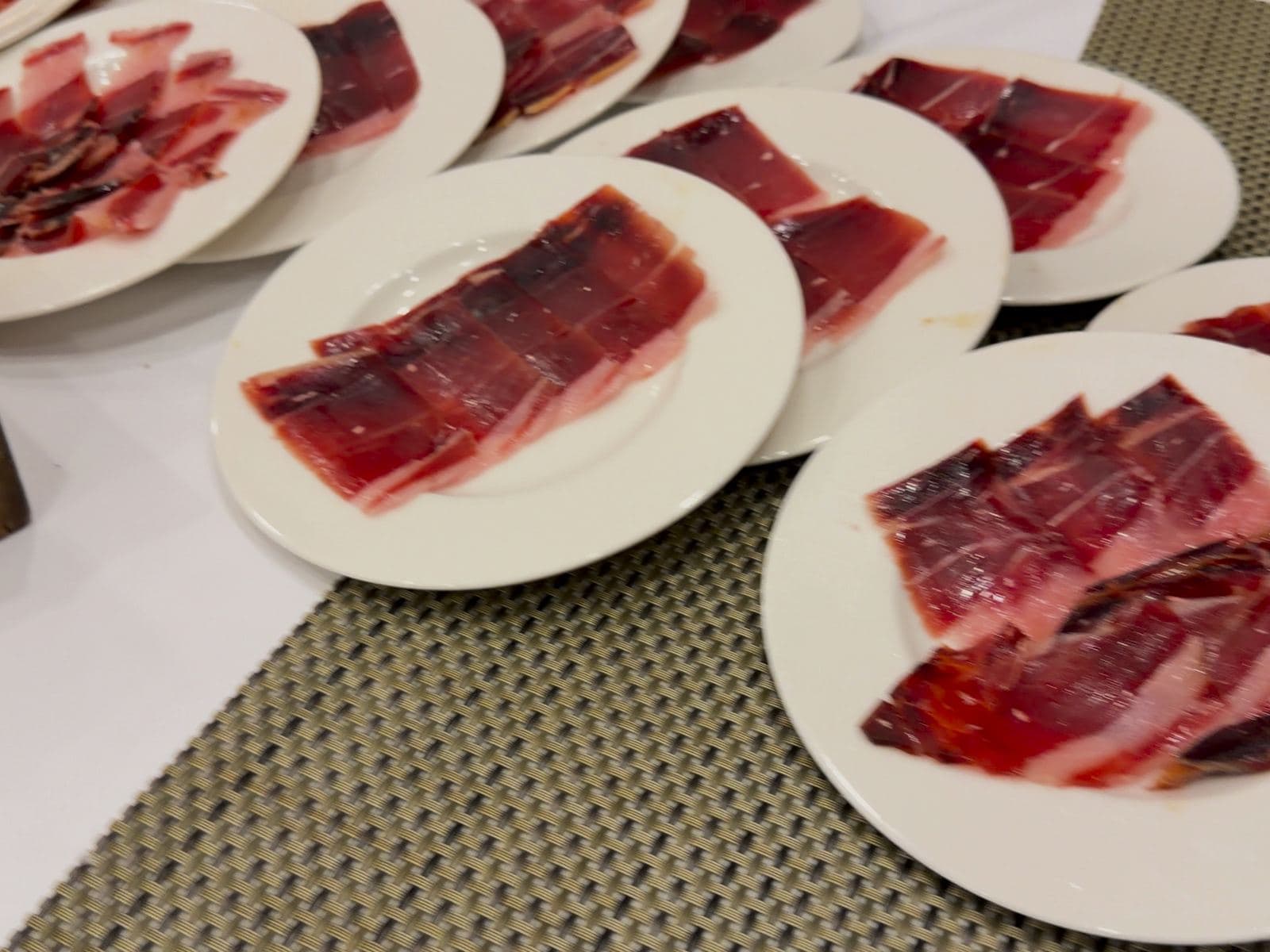
Anyone who works with ham every day knows it: the same piece does not taste the same straight out of the fridge as it does when brought to just the right temperature. Temperature is one of those silent variables that decide whether a slice unfolds its full aroma or falls short. In this post we review what research says about the ideal temperature for Iberico ham and, above all, how to apply it at home without any fuss.
The ideal temperature for storing ham
The quality of packaged slices can vary depending on the temperature at which we store them, according to scientists from the Food Technology and Quality research group (TECAL).
The experts found that packs of sliced ham with the same level of salt and fat suffered a loss of quality depending on the temperature at which they had been kept. So, even if we buy a top-quality ham, if we do not know how to store it at the right temperature, it may not keep its organoleptic properties intact.
Research into the optimum temperature for ham
The experiment was carried out by experts from the University of Extremadura (UEx). They exposed several packs of sliced Iberico ham to 7 °C, 16 °C and 20 °C, and discovered that high temperatures caused a reduction in the product's flavour: the higher the temperature, the weaker the salty taste so characteristic of ham.
Low temperatures, for their part, also alter the natural salty flavour of ham, which means a loss of quality compared with freshly cut Iberico ham at room temperature.
14 °C, the ideal temperature for ham
Jesús Ventanas, coordinator of TECAL, states that the optimum temperature is 14 °C: it is the point at which the fat in the ham starts to melt.
At 14 °C the flavour intensifies and this delicacy releases all its aromas.
The explanation is simple and anyone can check it at home: when the fat in the ham reaches its melting point, it goes from a matt appearance to a characteristic sheen, softens and begins to release the aromatic compounds it had been holding in. Below that point, the slice is stiffer and expresses less; above it, the fat turns oily and the texture suffers. That is why bringing ham to the right temperature is as important as having bought it well.
How to bring sliced ham to the right temperature at home
If you buy sliced, packaged ham, the most worthwhile step is also the simplest: take it out of the fridge in advance and let the room temperature of your home do the work. Keep the pack closed while it comes up to temperature; that way the slices will not dry out or lose their aroma too soon.
When you are ready to serve them, spread them out on a flat plate, without piling them up, so that they all reach the same temperature. The sign that they are ready comes not from the clock but from the fat: when it goes from matt to glossy and yields to the touch, the slice is just right.
One detail that is often overlooked is the plate. Serving ham on crockery just taken out of a cold cupboard slows down the warming; it is enough for the plate to be at room temperature. What we never recommend is speeding up the process with a microwave, radiators or other sources of direct heat: the fat melts too much, the slice turns oily and you lose exactly what you were after.
Common mistakes that spoil a good ham
- Serving it straight out of the fridge: the cold keeps the fat stiff and dulls the aromas.
- Warming it in a hurry over a direct heat source: the fat melts too much and the texture is lost.
- Opening the pack long before serving: the slices dry out and the aroma escapes.
- Piling the slices up on the plate: the ones in the middle are still cold when the outer ones are already just right.
- Storing the opened pack unprotected: contact with the air ends up oxidising the fat and dulling the flavour.
What about a whole ham? Where to keep it at home
Although the study focused on sliced, packaged ham, the same temperature logic also applies to the whole piece. Find it a cool, dry spot away from heat sources: never leave it next to the oven, on top of a radiator or in the sun by a window. Sudden changes in temperature are just as inadvisable as sustained heat.
Once you have started the piece, protect the cut surface by covering it with the fat you have trimmed off or with a clean cotton cloth. That way the surface does not dry out between one cutting and the next, and every serving has the texture it should.
A buying tip: packaged sliced ham works in your favour
The study itself offers a practical takeaway for anyone who buys sliced ham: the packaging is an ally, but only if it is stored at the right temperature. The advantage of the pack format is that it lets you portion: you open only what you are going to eat, bring it to temperature and serve it at its best, while the rest stays protected. It is the easiest way to make sure the last slice tastes as good as the first.
Frequently asked questions about ham temperature
Should packaged sliced ham be kept in the fridge?
Yes. While it remains in its packaging, it is best kept cold, following the instructions on the packaging itself, and temperature fluctuations should be avoided: as research by the University of Extremadura shows, heat during storage takes its toll on the flavour. Cold storage is no problem at all if you then spend a few minutes bringing the slices up to room temperature before serving them.
How long beforehand should I take the ham out of the fridge?
There is no single figure: it depends on the temperature of your home and the time of year. In summer the ham will come up to temperature more quickly; in winter, more slowly. The reliable guide is not the clock but the slice itself: when the fat glistens and softens to the touch, it is ready to serve.
Can I warm the ham in the microwave to speed things up?
Better not. Direct heat melts the fat all at once and leaves the slice oily and limp. Bringing ham up to temperature should be gentle and gradual: room temperature, patience and little else. If you are in a hurry, spread the slices out well apart on the plate; being more exposed to the air in the room, they reach their best sooner.
Why does cold ham have less flavour?
Because the cold plays two nasty tricks at once: it keeps the fat solid, which is where much of the aroma lies, and it dulls the perception of flavours in the mouth. That is what explains the 14 °C benchmark highlighted by the study: at that point the fat begins to melt and the ham reveals everything it has to offer.
If you want to enjoy your ham at its perfect point, in our workshop we slice it and package it in packs ready to bring up to temperature and serve.
View sliced 100% Iberico acorn-fed (de bellota) ham