
How to serve and present ham so it is just right
The Castanoble team · 5 min read
Published on 9 October 2026 · Updated on 19 October 2026
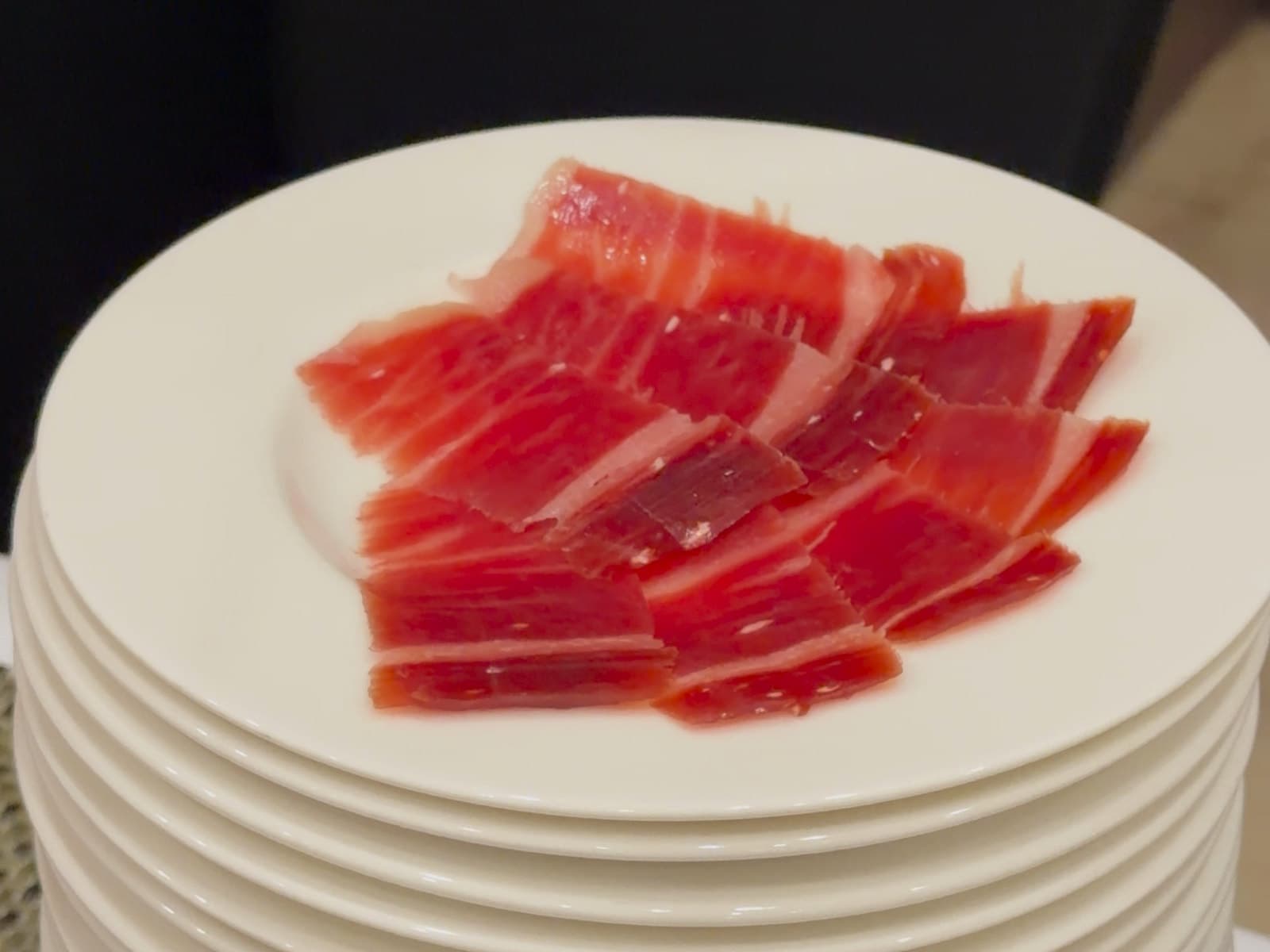
A slice of ham should reach the table juicy and glossy. Almost always, what stands in the way is not the ham but the temperature: straight out of the fridge it is cold, the fat has not yet softened and the aroma has not come out.
The right temperature
Ham is best enjoyed at between 20 and 25 °C: at that temperature the fat turns translucent and releases its aroma. Everything that follows has the same aim: for the ham to be at its proper temperature when it reaches the table.
If it comes out of the fridge
- Take the pack out a few minutes beforehand, open it and spread the slices out on the plate without piling them up.
- Serve them on a plate that is not cold. If the ham was vacuum-packed and comes out of the fridge cold, the plate can be slightly warm: it helps the slice come up to temperature sooner.
- Wait until they glisten: that is the sign they are just right.
The cut: thin, bite-sized slices
No plate can rescue careless carving. A thin, almost translucent slice melts on the palate and lets the fat release its aroma; a thick one turns out chewy. Make each slice bite-sized, so it can be picked up with the fingers without folding or tearing it at the table. If you carve with a knife, always cut in the same direction, with long strokes and without sawing: the slices come out whole and similar to one another, and are then easier to arrange.
How to arrange it on the plate
A flat, wide plate is best, without patterns and in a neutral colour: against white, the red of the meat and the marbling of the fat stand out on their own. Lay the slices in a single layer, barely overlapping at the edges, with no gaps between them and never stacked: piled up, they stick together and the ham loses its appeal.
The two classic methods both work: in circles, from the edge towards the centre, or in rows that overlap like the tiles on a roof. If there are many of you at the table, two or three medium plates are better than one enormous platter: they are easier to handle and can be refilled as they empty.
What to serve it with
The ham is the star: good bread, some picos or regañás are company enough. No sauces or dressings to mask it. And if it is part of a menu with several starters, serve it first, while the palate is still clean.
What to avoid
To bring ham to its proper temperature, never use the microwave or the oven: strong heat makes it salty and tough. Cooking with ham is another matter: as an ingredient in a recipe it brings different flavours, which is why it works in croquettes, scrambled eggs or a puff pastry. But when it is to be eaten as it is, all it needs is the right temperature.
And the usual mistakes: thick or unevenly sized slices, serving it cold with the fat stiff and dull, piling up the slices, a small plate where they cannot be spread out, and plating too far in advance, so they lose their sheen in the air. Correct those five details and any plate of ham improves enormously.
To keep it juicy
- Only carve or open what is going to be eaten there and then.
- If there is any left over, cover it tightly with cling film and keep it in the fridge; eat it as soon as possible.
- On a whole ham, always cover the cut surface with its own fat between one carving and the next.
- Away from direct sunlight, the oven and radiators.
If there is some left over and it no longer looks its best
Slices that have spent too long exposed to the air lose their sheen. In the kitchen they are still ham: finely chopped with a knife, they add flavour to croquettes, scrambled eggs, baby broad beans or a cream of vegetable soup. Add them at the end, off the heat or nearly so.
How far in advance can I plate it?
Ideally, plate it shortly before serving, so the slices do not lose their sheen. If you need to get ahead, cover the plate to protect it from the air, keep it away from intense cold and any source of heat, and uncover it just as you bring it to the table.
Vacuum-packed slices in 100 g packs: you only open what you are going to eat
See sliced products