
How to choose the weight of the ham and its degree of curing (so there is neither too much nor too little)
The Castanoble team · 5 min read
Published on 12 September 2026
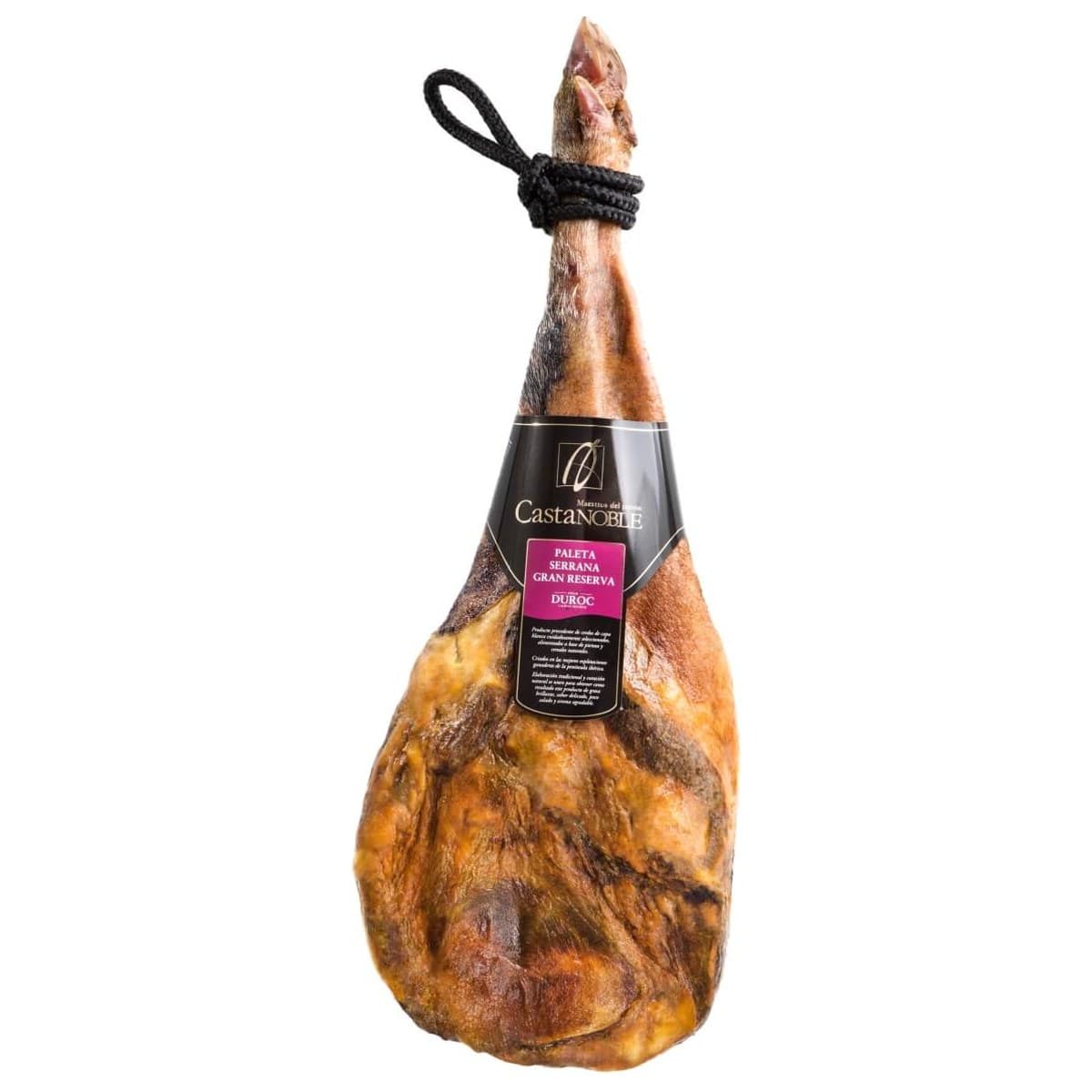
On our product pages you choose two things that cannot be chosen in most shops: the weight of the piece, in half-kilo steps, and the degree of curing. Both matter more than they seem, because they decide whether the ham is finished at its best or dries out while waiting. Here is how to decide on them.
How much ham you get from a piece
A whole ham weighs between 7 and 9 kilos; a shoulder, between 4 and 6. Around half of a ham's weight ends up as slices; from a shoulder, somewhat less, close to 40 %. The rest is bone, rind and trimmed fat, and in a quality piece that is normal: the fat that is trimmed off is the very fat that protected the meat during curing. So an 8-kilo ham means about 4 kilos of ham on the plate, and a 5-kilo shoulder, about 2.
How many people it serves
As an appetiser, between 80 and 100 grams per person is a generous serving. On that basis, an 8-kilo ham gives around forty-five servings, and a 5-kilo shoulder around twenty. In real-life terms: a whole ham is for a household that celebrates, entertains or eats ham every day for weeks; a shoulder is for a family that wants to open it, enjoy it for a couple of weeks and finish it at its best. If there are only a few of you and you are in no hurry, the shoulder is almost always the smarter choice.
Weight, half a kilo at a time
Within the same quality, weight does not change the flavour; it changes the quantity and, slightly, the proportion: a larger piece has a little more meat in relation to bone and keeps better once opened. The rule we give in the shop is simple: if you are torn between two weights, choose the smaller one if there will only be a few of you and the larger one if you are having guests. An opened ham that is finished in three weeks is always better than one that drags on for three months.
Tender, medium or well cured: what each one means
This is what nobody explains. When you choose the degree of curing, one of our specialists selects, in the curing house, the piece of that quality that best suits your taste. 'Rather tender' is a piece with juicier, more supple meat, milder salt and a fresher flavour: it is the degree preferred by those coming from sliced ham and by those who will eat it in quantity. 'Medium' is the balance, the one we choose ourselves when we do not know who will be eating it. 'Rather well cured' is a more matured piece: firmer, darker meat, a more concentrated and lingering flavour, with those white tyrosine crystals that appear in long curings. It is the degree for those who seek intensity and know how to carve thinly.
- Rather tender: juicy, mild in salt, fresh. For households that eat ham often and for beginners.
- Medium: the balance. If you don't know who will be eating it, choose this one.
- Rather well cured: firm, intense, long-lasting. For those who seek character and carve it thinly.
The degree you choose travels as a note on the order; it does not change the price and it is not a different variant: it is the same quality, hand-selected. And if you are unsure, leave it at medium and tell us in the order who will be eating it; we have been choosing pieces for others for half a century.
Choose weight and degree of curing on each product page
View hams and shoulders